
86-0769-89610677 / 86-13553838770 | info@jinjiadongli.com
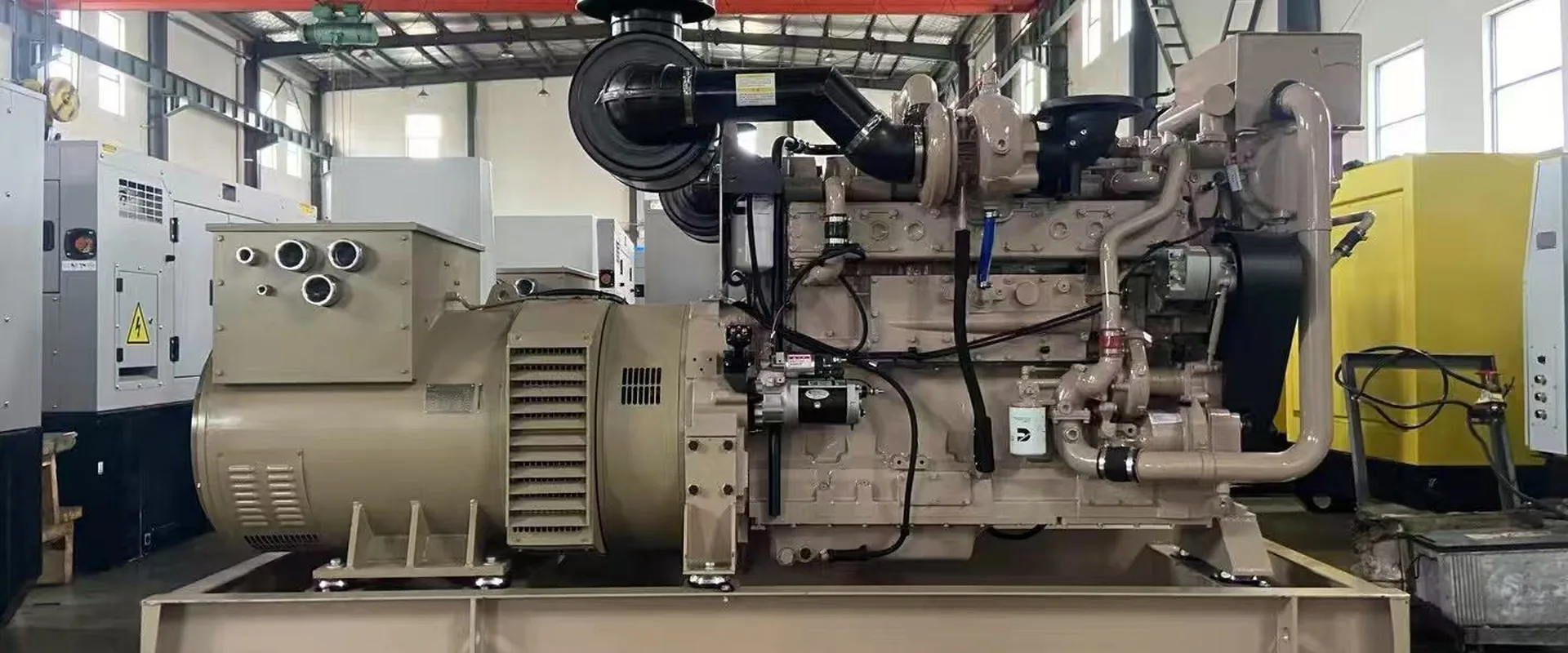
JJP-M500GF — 625 kVA / 500 kW prime, 688 kVA / 550 kW standby. 902 A per phase at 400 V, 3,800 × 1,650 × 2,150 mm, 2,800 kg, 109.6 L/h at full load. FOB China US$38,000–52,000.
See the Full Specification625 kVA is the top of the 50–625 kVA range. 1500 rpm at 50 Hz, 1800 rpm at 60 Hz, three-phase four-wire, 0.8 power factor. EPA Tier 3 stationary emergency compliant, with a Deep Sea DSE7320 MKII controller as standard.
This rating is also listed as a product page — JJP-M500GF 500 kW silent diesel generator set, with the canopy build, shipping dimensions and engine option table.
| Voltage | Phase | Current at 625 kVA | Suggested breaker frame |
|---|---|---|---|
| 380 V | 3-phase | 950 A | 1250 A |
| 400 V | 3-phase | 902 A | 1250 A |
| 415 V | 3-phase | 870 A | 1250 A |
| 440 V | 3-phase | 820 A | 1250 A |
| 480 V | 3-phase | 752 A | 1000 A |
| 220 V | 1-phase | 2841 A | special winding |
| 240 V | 1-phase | 2604 A | special winding |
I = kVA × 1000 ÷ (√3 × V). Breaker sizing at 125% of the 400 V figure gives 1,128 A, so a 1,250 A frame. Cable at 902 A needs roughly 4 × 185 mm² copper per phase for a run under 50 m, or a busbar trunking run where the distance is longer. Do not attempt a single-phase 625 kVA set — balance the load across three phases instead.
| Configuration | L × W × H | Weight |
|---|---|---|
| Open skid | 3,800 × 1,650 × 2,150 mm | 2,800 kg |
| Silent canopy | 4,400 × 2,250 × 2,750 mm | 2,980–3,050 kg |
| With full baseframe tank | — | +300–600 kg depending on tank size |
At 2,800 kg the open set needs a crane or a heavy forklift with the correct spreader — a 3-tonne forklift is at its limit once the forks are extended. Allow 1 m clearance at the alternator end for cooling air, and confirm the canopy door swing on both long sides before siting. Cast a level concrete plinth rated for 1.5× the wet weight.
| Load | Diesel L/h | US gal/h |
|---|---|---|
| 625 kVA / 500 kW (100%) | 109.6 L/h | 29.0 |
| 468 kVA / 375 kW (75%) | 82.2 L/h | 21.7 |
| 312 kVA / 250 kW (50%) | 54.8 L/h | 14.5 |
Based on ≤183 g/kWh specific consumption at full load and 835 g/L diesel density. Unlike the smaller frames, specific consumption rises noticeably below 75% load, so a set that spends its life at 40% burns more fuel per kWh than the full-load figure suggests. Ask for the part-load curve if the set will run lightly loaded for long periods — or step down a rating.
Runtime is tank volume divided by consumption at the load you actually run. At this rating the tank is usually a separate bunded tank or an integral double-walled baseframe tank — both are built to the order, so start from the runtime you need.
| Tank | Runtime at full load (109.6 L/h) | Runtime at 50% load (54.8 L/h) |
|---|---|---|
| 500 L | 4.6 h | 9.1 h |
| 800 L | 7.3 h | 14.6 h |
| 1,000 L | 9.1 h | 18.2 h |
| 1,500 L | 13.7 h | 27.4 h |
| 2,000 L | 18.2 h | 36.5 h |
| Brand | Engine model | Standby output | Cylinders | Displacement |
|---|---|---|---|---|
| Weichai | 6M33D633E310 | 633 kW | 6-cyl | 19.6 L |
| Cummins | QSK19-G4 | 574 kW | 6-cyl | 19 L |
| Perkins | 2806A-E18TAG2 | 550 kW | 6-cyl | 18 L |
| Volvo | TAD1233GE | 522 kW | 6-cyl | 12.1 L |
Coupled to a Leroy Somer LSA47.3S4 or Stamford HCI544 alternator, with a Deep Sea DSE7320 MKII controller as standard and DSE8610 for parallel operation. At 625 kVA the engine choice moves both price and serviceability — Cummins and Perkins have the widest parts network in Africa and the Middle East; Weichai is the cost-competitive option with strong regional support; Volvo suits projects with emission or brand requirements. Note the Volvo figure: 522 kW standby against a 500 kW prime rating leaves a thin margin, so confirm the derate before specifying it for a continuous load.
Open-skid JJP-M500GF sets run US$38,000–52,000 FOB China. Engine brand moves that band more than anything else — Cummins and Perkins sit at the top, Weichai at the bottom. A sound-attenuated canopy adds 8–12% and about 200–250 kg. Budget separately for a 1,250 A breaker, an ATS if the site needs one, the exhaust and the freight, which for a 2,800 kg set is a real line item rather than an afterthought.
902 A per phase at 400 V three-phase, 950 A at 380 V, 870 A at 415 V, 752 A at 480 V. Size the breaker at 125% of the 400 V figure — 1,128 A, so a 1,250 A frame.
At 0.8 power factor, yes — 625 × 0.8 = 500 kW. Note that 625 kVA is also what a 500 kVA set becomes when described in kW terms at a different point on the curve; check whether the tender is asking for 500 kW or 500 kVA before quoting, because they are different sets.
550 kW / 688 kVA standby against 500 kW / 625 kVA prime. Standby covers loss-of-mains supply with a varying load and no overload, limited to 200 h per year. Prime allows unlimited hours with 10% overload for one hour in twelve.
109.6 L/h at full load, working from the engine’s ≤183 g/kWh specific consumption at 835 g/L diesel density. At 75% load it is 82.2 L/h. Specific consumption rises as load falls, so ask for the part-load curve if fuel cost drives the decision.
Four options: Weichai 6M33D633E310 at 633 kW standby, Cummins QSK19-G4 at 574 kW, Perkins 2806A-E18TAG2 at 550 kW, or Volvo TAD1233GE at 522 kW. All are six-cylinder and the alternator is a Leroy Somer LSA47.3S4 or Stamford HCI544.
3,800 × 1,650 × 2,150 mm and 2,800 kg on an open skid. The silent canopy adds 300 mm to each dimension and 180–250 kg, giving roughly 4,400 × 2,250 × 2,750 mm before fuel.
Yes, with the DSE8610 controller, matching alternator pitch and a synchronising panel. Two sets give 1,250 kVA total, or N+1 redundancy at 625 kVA. Specify it at the quote stage — retro-fitting is expensive.