
86-0769-89610677 / 86-13553838770 | info@jinjiadongli.com
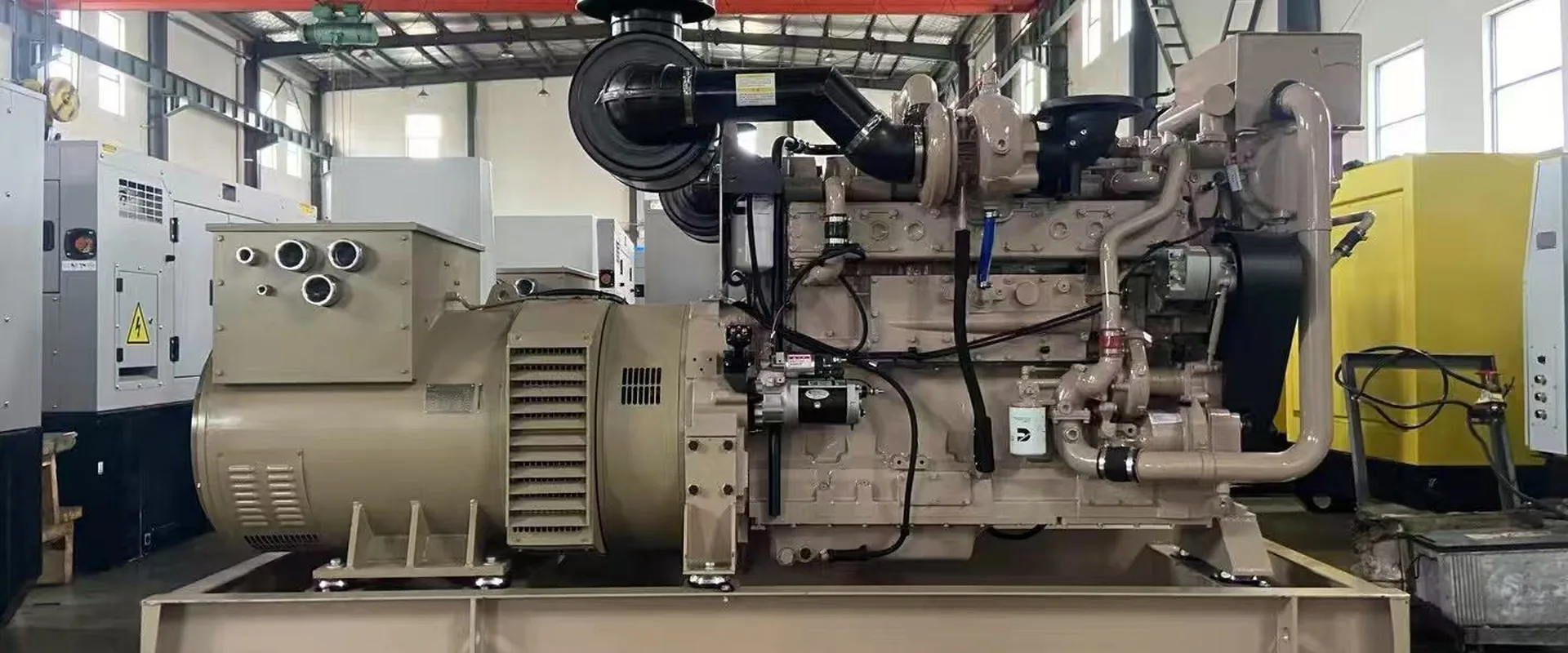
200 kVA is covered by our 250 kVA prime set — 289 A per phase at 400 V, 2800 × 1200 × 1700 mm, 1600 kg, 36.8 L/h at 200 kVA load. Or by the 206 kVA standby rating of the 150 kW frame.
See Which Set Covers 200 kVAThis matters before you compare quotes. Our frames step from 187 kVA prime straight to 250 kVA prime — there is no set rated exactly 200 kVA for continuous duty. So a 200 kVA requirement resolves to one of two real machines, and which one is correct depends on whether the load runs continuously or only on mains failure.
Rule of thumb: if the words “prime”, “continuous” or “12 hours a day” appear in the brief, the answer is JJP-M200GF. If the brief is “backup for when the grid drops”, JJP-M150GF carries 200 kVA at standby.
| Configuration | JJP-M200GF (250 kVA prime) | JJP-M150GF (187 kVA prime) |
|---|---|---|
| Open skid, L × W × H | 2800 × 1200 × 1700 mm | 2600 × 1150 × 1600 mm |
| Open skid weight | 1600 kg | 1400 kg |
| Silent canopy | +300 mm per dimension | +300 mm per dimension |
| Silent canopy weight | 1780–1850 kg | 1580–1650 kg |
| Approx. silent footprint | 3400 × 1800 × 2300 mm | 3200 × 1750 × 2200 mm |
Transport weight is the open-skid figure plus fuel. A 200 kVA set is normally lifted by crane or forklift, not by hand — allow 1.8–2.0 t for a canopied M200GF before fuel, and confirm the lifting point rating on the baseframe before it leaves the truck.
| Voltage | Phase | Current at 200 kVA | Current at 160 kW (0.8 PF) |
|---|---|---|---|
| 380 V | 3-phase | 304 A | 304 A |
| 400 V | 3-phase | 289 A | 289 A |
| 415 V | 3-phase | 278 A | 278 A |
| 440 V | 3-phase | 262 A | 262 A |
| 480 V | 3-phase | 241 A | 241 A |
| 220 V | 1-phase | 909 A | 909 A |
| 240 V | 1-phase | 833 A | 833 A |
Formula: I = kVA × 1000 ÷ (√3 × V) for three-phase, I = kVA × 1000 ÷ V for single-phase. Size the main breaker at 125% of the 400 V figure — 289 A → a 400 A frame breaker, with 4 × 95 mm² copper for a run under 50 m. Single-phase 200 kVA sets are wound specially; they are not the same alternator.
| Load | JJP-M200GF | US gal/h | JJP-M150GF | US gal/h |
|---|---|---|---|---|
| 250 kVA / 200 kW (100%) | 46.0 L/h | 12.1 | — | — |
| 200 kVA / 160 kW | 36.8 L/h | 9.7 | — | — |
| 187 kVA / 150 kW | 34.5 L/h | 9.1 | 35.2 L/h | 9.3 |
| 150 kVA / 120 kW | 27.6 L/h | 7.3 | 28.2 L/h | 7.4 |
| 100 kVA / 80 kW | 18.4 L/h | 4.9 | 18.8 L/h | 5.0 |
| 50 kVA / 40 kW | 9.2 L/h | 2.4 | 9.4 L/h | 2.5 |
Based on ≤192 g/kWh (M200GF) and ≤196 g/kWh (M150GF) at 835 g/L diesel density. Real consumption tracks load almost linearly — a set idling at 25% burns roughly a quarter of full-load fuel but delivers only a quarter of the power, so running two small sets at high load beats one large set at low load.
| Brand | Engine model | Standby output | Cylinders | Displacement |
|---|---|---|---|---|
| Weichai | WP10D238E200 | 238 kW | 6-cyl | 9.7 L |
| Cummins | NTA855-G1 | 240 kW | 6-cyl | 14 L |
| Perkins | 1206A-E70TAG2 | 210 kW | 6-cyl | 7 L |
| Volvo | TAD731GE | 209 kW | 6-cyl | 7.2 L |
| Yuchai | YC6A260-D20 | 191 kW | 6-cyl | 7.3 L |
All five are six-cylinder water-cooled units coupled to a Faraday FD3G-4 or Stamford HCI444 alternator, with a Deep Sea DSE7320 MKII controller as standard and DSE8610 for parallel operation. Yuchai is the lowest-cost option but its 191 kW standby output leaves the least margin — confirm the derate before specifying it for a continuous 200 kVA load.
A 200 kVA requirement lands on the 250 kVA prime frame, so budget from the JJP-M200GF band rather than from a notional 200 kVA price. Open-skid sets in this class run US$14,000–20,000 FOB China depending on engine brand — Cummins NTA855 and Perkins 1206A sit at the top of that band, Weichai and Yuchai at the bottom. A sound-attenuated canopy adds roughly 8–12% and about 200 kg. Add an ATS, a 400 A breaker and freight on top. The 150 kW frame sits at US$11,000–15,500 and is only appropriate where standby duty is genuinely enough.
Frames are built around engine platforms, not round numbers. The 6-cylinder 7–9.7 L engines that suit this class land at 187 kVA and 250 kVA prime — a 200 kVA winding would need a bespoke alternator and engine match, which adds cost without adding capability. Buyers get better value from the 250 kVA frame.
Yes, and it is the intended use. Running at 80% of prime rating is the most efficient operating point — fuel burn per kWh is lower than at 100%, and the 25% headroom absorbs motor starting and ambient derate.
289 A per phase at 400 V three-phase, 304 A at 380 V, 278 A at 415 V, 241 A at 480 V. Single-phase 220 V is 909 A. Size the breaker at 125% of the 400 V figure.
1600 kg on an open skid for the 250 kVA frame (2800 × 1200 × 1700 mm). Add 180–250 kg and 300 mm per dimension for the silent canopy, giving roughly 1.8–1.85 t before fuel.
36.8 L/h at a 200 kVA load (160 kW), 46.0 L/h at full 250 kVA, 18.4 L/h at 100 kVA. That is about 0.18 L per kVA per hour at rated load.
Three-phase is standard. A single-phase 200 kVA set needs a specially wound alternator and is rarely economic above about 50 kVA — if the site is single-phase, split the load across three phases instead.
Yes. Specify the DSE8610 controller instead of the DSE7320 and both sets share load and provide N+1 redundancy. This is the usual configuration for data huts and hospitals where a single set is not acceptable.
65–75 dB(A) at 7 m for the canopied set, depending on acoustic grade. Residential-grade units sit at the low end; standard export canopies at the high end.
Cummins NTA855 and Perkins 1206A for proven parts availability in Africa and the Middle East; Weichai for cost with a strong regional service network; Volvo where emissions compliance matters; Yuchai only where the 191 kW standby output still clears the load.
Send the running kW, the largest motor, and whether it is continuous or standby — we will confirm whether the 250 kVA or the 150 kW frame is the right answer and quote both.
Request a Quote