
86-0769-89610677 / 86-13553838770 | info@jinjiadongli.com
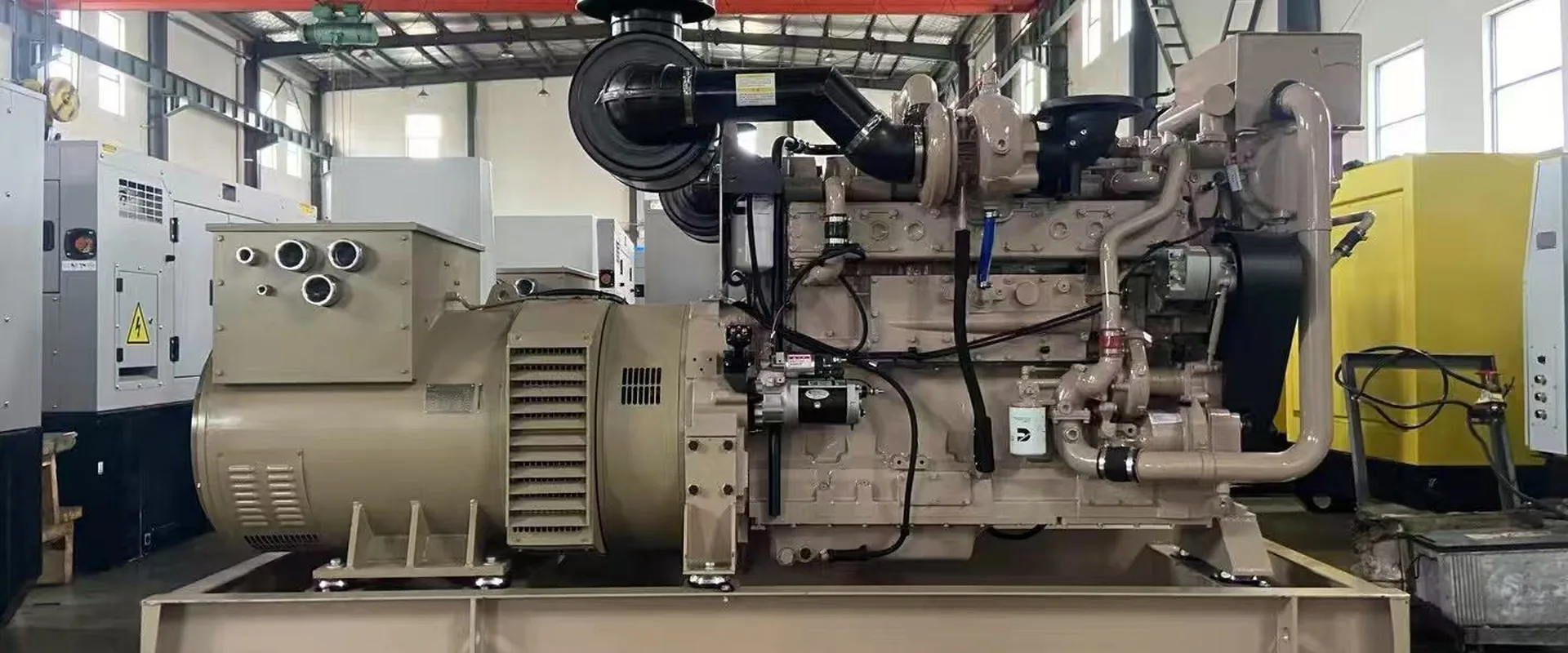
150 kVA / 120 kW prime, 165 kVA / 132 kW standby. 217 A per phase at 400 V, 27.6 L/h at full load. Built to order on the M120 frame — engine and alternator specified to your load list.
See the Full Specification150 kVA is the prime rating on the nameplate, not a rounded-up figure. 1500 rpm at 50 Hz, 1800 rpm at 60 Hz, three-phase four-wire, 0.8 power factor. The frame is built to order, so the engine and alternator are matched to the load list at quotation rather than pulled from a fixed catalogue combination.
| Voltage | Phase | Current at 150 kVA | Suggested breaker frame |
|---|---|---|---|
| 380 V | 3-phase | 228 A | 320 A |
| 400 V | 3-phase | 217 A | 320 A |
| 415 V | 3-phase | 209 A | 320 A |
| 440 V | 3-phase | 197 A | 250 A |
| 480 V | 3-phase | 180 A | 250 A |
| 220 V | 1-phase | 682 A | special winding |
| 240 V | 1-phase | 625 A | special winding |
I = kVA × 1000 ÷ (√3 × V). Breaker sizing at 125% of the 400 V figure gives 271 A, so a 320 A frame. Cable at 217 A needs roughly 2 × 70 mm² copper per phase for a run under 50 m, or 1 × 120 mm² where the run is short and derating allows. A single-phase 150 kVA set needs a bespoke alternator — balance the load across three phases instead.
This rating is assembled to order, so the drawing package is issued with the quotation rather than published here — overall length, width and weight depend on the engine you choose and whether the set carries a canopy or an open skid. What does not change is the siting logic, and that is where most installs go wrong.
| Item | What to allow |
|---|---|
| Access at the alternator end | 1 m clear for cooling air intake and for pulling the alternator if it ever needs rewinding |
| Radiator end | 1.5 m clear, and the hot air must not recirculate back into the intake — duct it out of the room |
| Side clearance | Canopy doors swing on both long sides; leave the door width plus 300 mm |
| Plinth | Level concrete rated for 1.5× the wet weight of the set plus tank |
| Door and lift route | Confirm the canopy fits through the plant room door before it ships — this is the most expensive mistake to fix later |
| Exhaust | Routed to open air with a flexible section; do not let the silencer carry the weight of the pipe run |
Send us the plant room dimensions and the door opening and we will confirm the layout on the GA drawing before the order is released.
| Load | Diesel L/h | US gal/h |
|---|---|---|
| 150 kVA / 120 kW (100%) | 27.6 L/h | 7.3 |
| 120 kVA / 96 kW (80%) | 22.1 L/h | 5.8 |
| 90 kVA / 72 kW (60%) | 16.6 L/h | 4.4 |
| 60 kVA / 48 kW (40%) | 11.0 L/h | 2.9 |
| 30 kVA / 24 kW (20%) | 5.5 L/h | 1.5 |
About 0.184 L per kVA per hour at rated load. Consumption tracks load almost linearly in this class, so a set held at 50% for 12 hours a day burns roughly half the full-load figure for twice as long: the fuel bill per kWh barely changes, but the engine runs cleaner and the service interval stretches.
Runtime is tank volume divided by consumption at the load you actually run. The baseframe tank is built to the order, so start from the runtime you need and work back to the volume.
| Baseframe tank | Runtime at full load (27.6 L/h) | Runtime at 50% load (13.8 L/h) |
|---|---|---|
| 300 L | 10.9 h | 21.7 h |
| 400 L | 14.5 h | 29.0 h |
| 500 L | 18.1 h | 36.2 h |
| 600 L | 21.7 h | 43.5 h |
| 800 L (silent canopy) | 29.0 h | 58.0 h |
The 150 kVA frame is built to order, so the engine is a specification decision rather than a fixed model number. Four brands cover almost every enquiry at this rating, and the choice moves price, parts availability and serviceability more than any other line on the quote.
| Brand | Choose it when | Watch out for |
|---|---|---|
| Weichai | Cost matters and the site is in Asia, Africa or the Middle East where parts are stocked | Confirm the standby rating clears the load with margin before releasing |
| Cummins | Parts network and resale value drive the decision, or the tender names the brand | Highest price in the band |
| Perkins | Similar to Cummins on availability, often keener on price in Europe-facing projects | Check the specific fuel curve at part load if fuel cost is the deciding factor |
| Volvo | Emissions or brand specification is written into the contract | Lead time and price premium |
Alternators are matched to the engine at the same time — Stamford, Leroy Somer or a comparable Chinese build — and the whole set is load-bank tested at rated output before it leaves the floor. Tell us the destination country and the duty and we will propose the engine rather than leaving you to pick a name.
We quote this rating against the engine and alternator you specify rather than publishing a catalogue band, because the same 150 kVA frame spans a wide range between a Weichai build and a Cummins or Perkins build. What we need to give you a usable number: the load list or the standby kVA you are sizing to, the voltage and frequency, open skid or canopy, and the destination port. The quote then carries the engine model, alternator model and the load-bank test sheet — not a range.
217 A per phase at 400 V three-phase, 228 A at 380 V, 209 A at 415 V, 180 A at 480 V. Size the breaker at 125% of the 400 V figure — 271 A, so a 320 A frame.
At 0.8 power factor, yes — 150 × 0.8 = 120 kW. If the site power factor is lower than 0.8, the usable kW drops below 120 and the rating needs rechecking against the load list.
27.6 L/h at full 150 kVA load, 13.8 L/h at half load. That is about 0.184 L per kVA per hour — consumption tracks load almost linearly in this class.
187 kVA is the same frame described in kW rather than kVA: 150 kW at 0.8 PF equals 187 kVA. If a tender asks for 150 kW, quote 187 kVA. If it asks for 150 kVA, that is 120 kW — the smaller set. Getting this backwards is the most common sizing error we see.
Only if it is the largest load and the set is sized for the starting current. A 90 kW DOL motor draws roughly 6–7 times full-load current for 3–8 seconds. Either fit a soft starter or star-delta, or move up to 200 kVA. Send us the motor list and we will check the dip.
A 400 L baseframe tank gives 14.5 h at full load and 29.0 h at half load. Tanks are built to the order, so specify from the runtime you need rather than picking a standard size.
It depends on the engine and alternator you specify. We quote against your load list and destination port rather than publishing a catalogue band, because the same 150 kVA frame spans a wide price range between a Weichai build and a Cummins or Perkins build.