
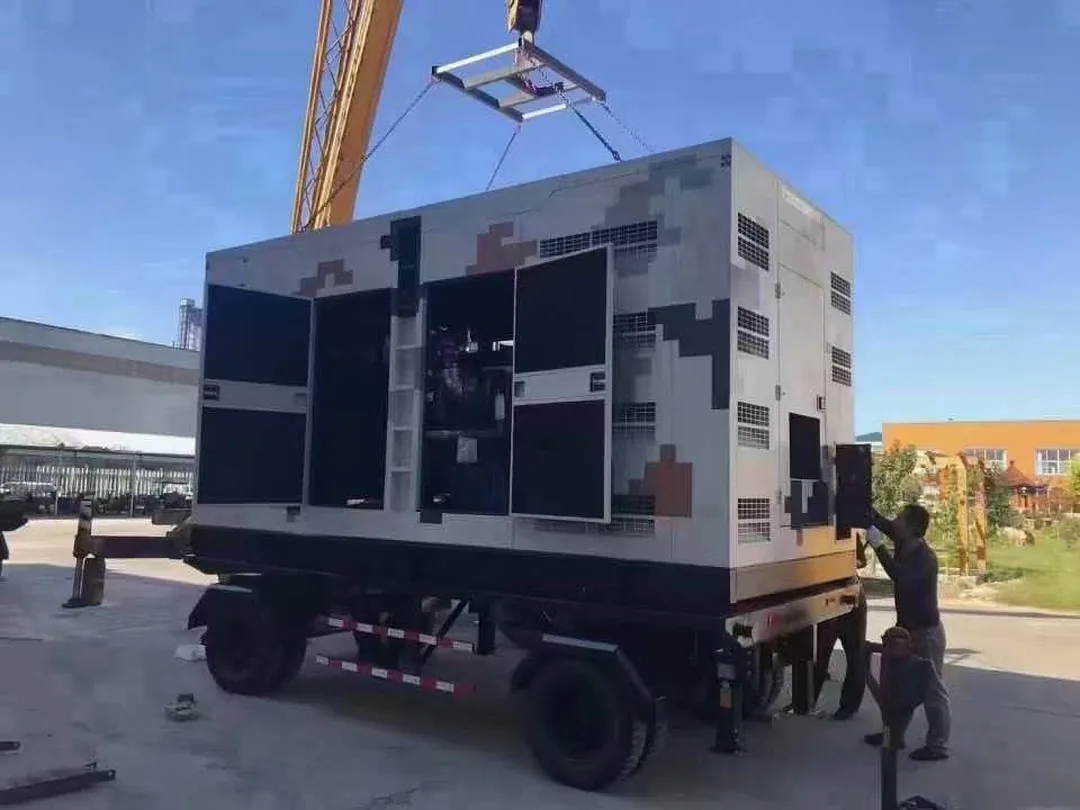
SILENT DIESEL GENERATORS
Soundproof canopy gensets from 20kW to 1000kW — 65–78 dB(A) at 7m, for residential, hospital and commercial sites
HOW QUIET DOES IT NEED TO BE?
Sound pressure at 7m for each enclosure type — pick the level your site actually requires, not the loudest one you can afford
| Configuration | Sound Pressure @ 7m | Typical Installation |
|---|---|---|
| Open skid (no canopy) | 95 – 105 dB(A) | Plant room, remote site, container yard — no noise-sensitive neighbours |
| Standard acoustic canopy | 75 – 85 dB(A) | Industrial estate, construction site, factory yard |
| Silent canopy | 70 – 78 dB(A) | Office building, hotel, retail, mixed-use development |
| Super silent canopy | 65 – 70 dB(A) | Hospital, school, residential boundary |
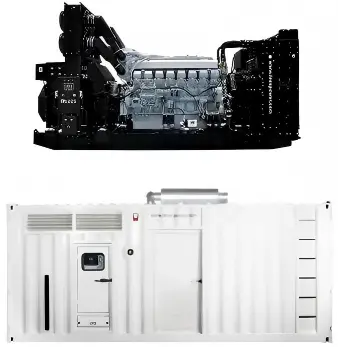
| Containerised acoustic module | 65 – 75 dB(A) | Data centre, urban substation, N+1 parallel plant |
Sound pressure falls by roughly 6 dB(A) every time you double the distance from the set. A unit rated 75 dB(A) at 7m reads about 63 dB(A) at 28m and 57 dB(A) at 56m — which is often enough on its own to clear a residential boundary limit.
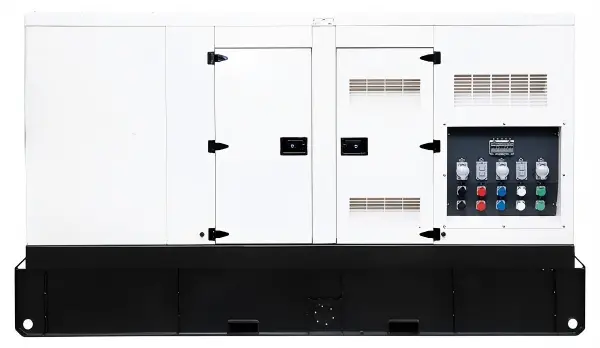
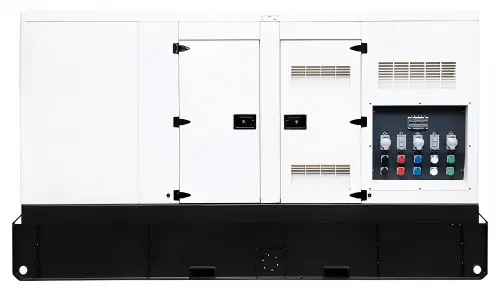
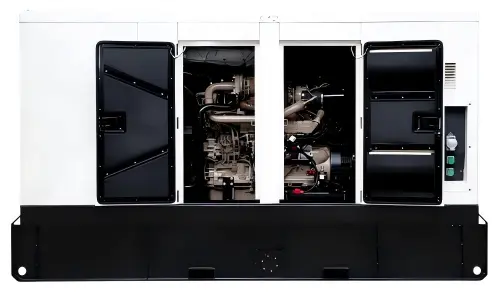
PRODUCT GALLERY
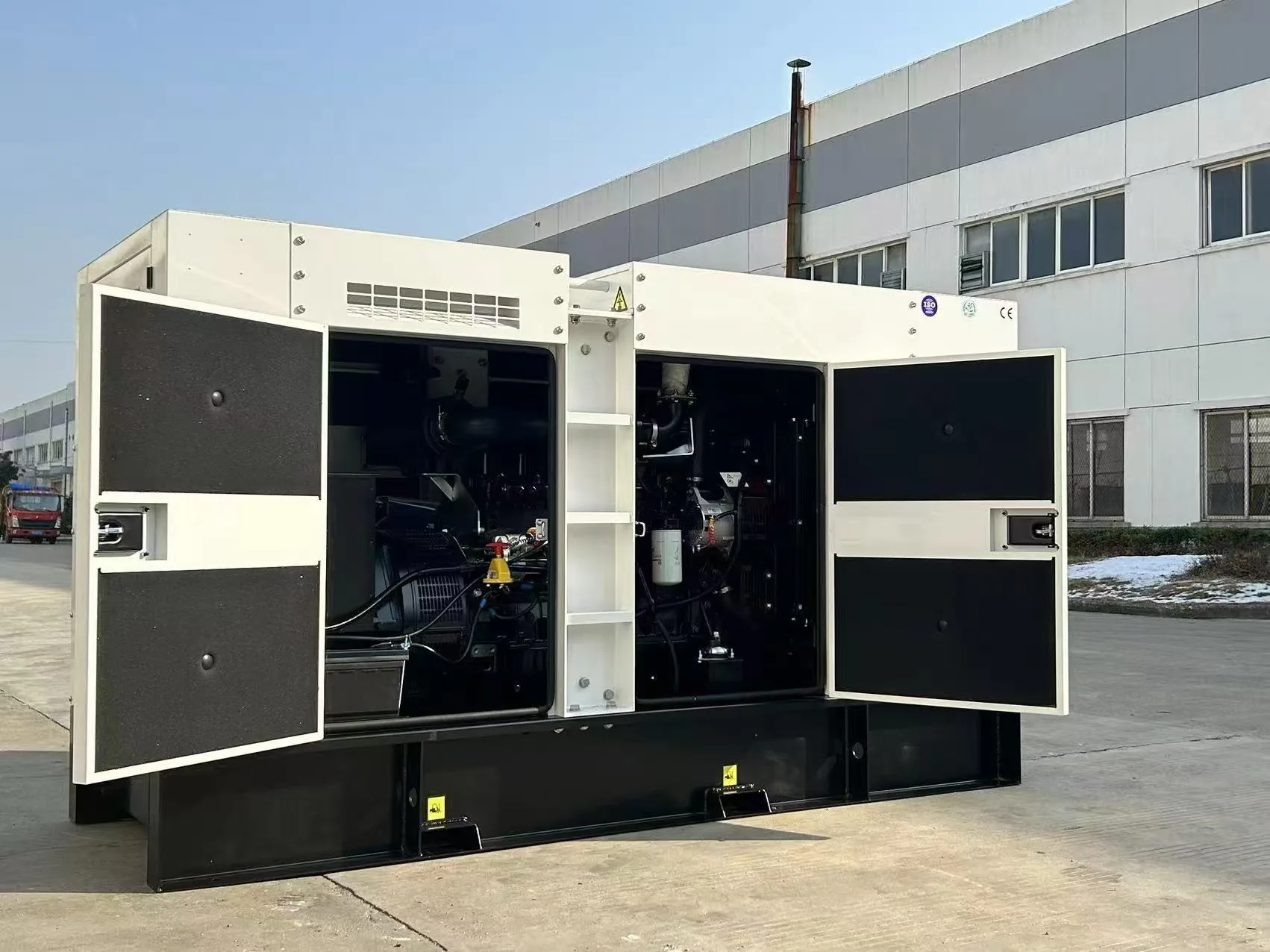
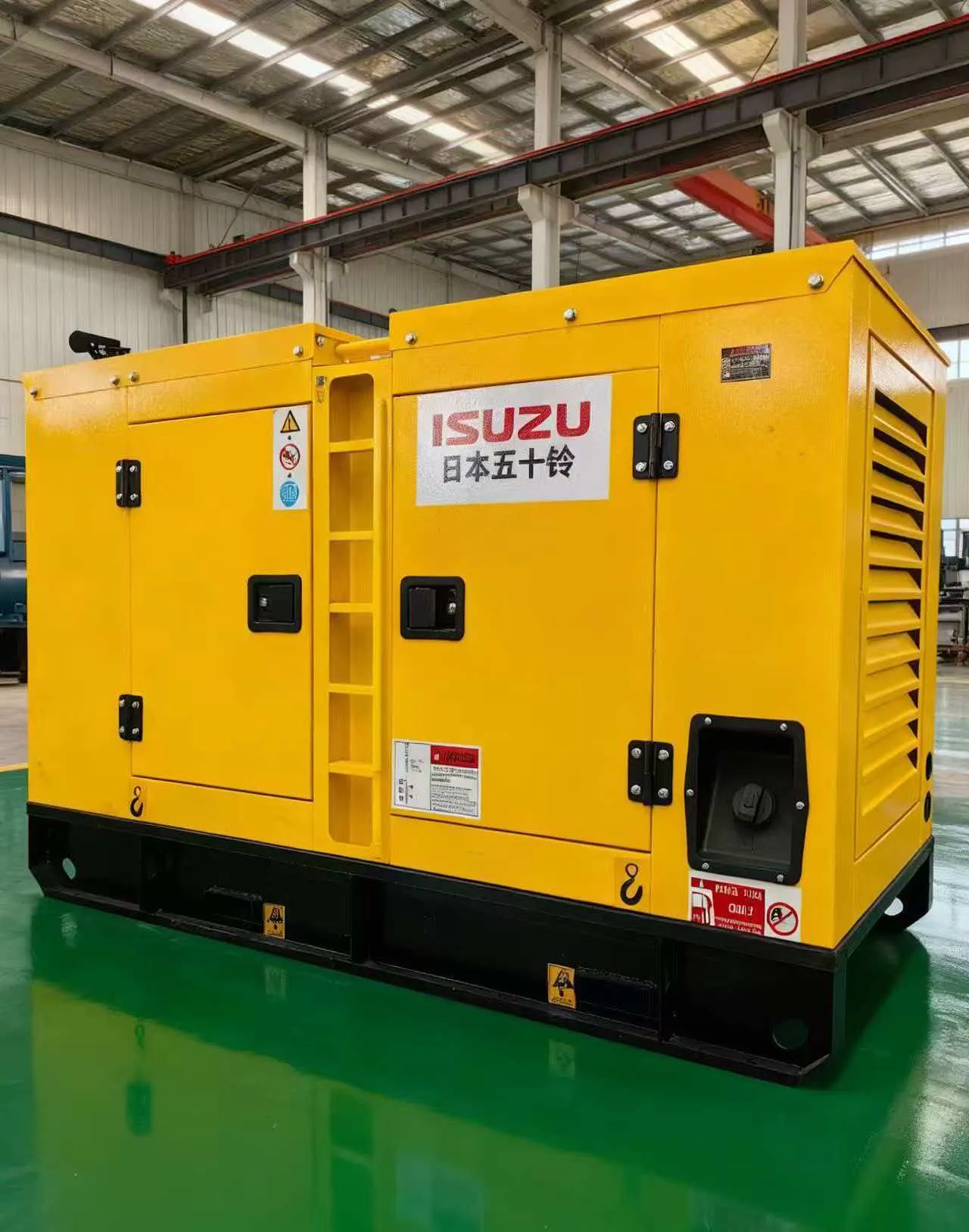
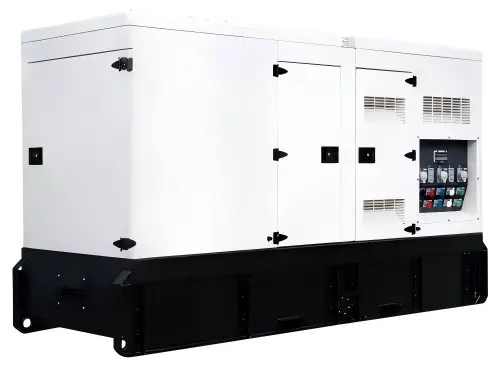
Silent canopy sets built and tested in our Dongguan facility
WHAT IS INSIDE THE CANOPY
A silent genset is not an open set in a box. The enclosure is an engineered acoustic assembly — here is what actually does the work
Acoustic Lining
50–100mm mineral wool or glass fibre at 24–48 kg/m³ density, faced with perforated galvanised sheet at 25–30% open area. The perforated facing protects the absorber from oil mist and airflow without reflecting sound back into the box.
Critical-Grade Exhaust Silencer
The exhaust is the dominant noise path on a diesel set. We fit a residential-grade (critical) silencer inside the canopy, with the tail pipe routed through an acoustic collar so vibration does not bypass the isolation.
Louvred Air Path
Combustion air and radiator air both enter and leave through labyrinth baffles lined with absorber. The baffle turns the air path twice, so direct line-of-sight to the fan is blocked — which is where most of the fan noise would otherwise escape.
Sealed Double-Skin Doors
Service doors are double-skinned with EPDM gaskets and cam-lock latches. A door that does not seal properly is the single most common reason a "silent" set measures loud on site — we leak-test each canopy before dispatch.
Integrated Base Tank
Fuel tank built into the base frame for 8–24 hours of running, with lockable fill, level gauge and bunded containment. Keeps the footprint compact and removes an external tank from the site plan.
Weather & Security
2.0mm galvanised steel outer skin, electrostatic powder coat, IP44–IP54 rated enclosure, lockable doors and lifting eyes. Designed to sit outdoors year-round without a separate building.
TECHNICAL SPECIFICATIONS
Typical configuration by power band — exact figures confirmed on the quotation for your rating
| Power Range | Engine Options | Sound Level | Fuel Tank | Run Time | Voltage |
|---|---|---|---|---|---|
| 20 – 100 kW | Isuzu, Perkins, Cummins, Yangdong | 68 – 72 dB @ 7m | 200 – 400 L | 12 – 16 hrs | 208/480V 3-Phase |
| 100 – 300 kW | Perkins, Cummins, SDEC, Yuchai | 70 – 75 dB @ 7m | 400 – 800 L | 10 – 14 hrs | 208/480/600V 3-Phase |
| 300 – 500 kW | Cummins, Volvo, SDEC, Weichai | 72 – 75 dB @ 7m | 800 – 1200 L | 8 – 12 hrs | 480/600V 3-Phase |
| 500 – 1000 kW | Perkins, Cummins, MTU, Mitsubishi | 75 – 78 dB @ 7m | 1200 – 2000 L | 8 – 10 hrs | 480/600V / 11kV |
All sets are load-bank tested at 100% rated output before shipment. Sound levels are measured at 7m in free field with the set on load — site measurements depend on reflective surfaces and enclosure placement.
WHERE SILENT SETS ARE SPECIFIED
The installations where an open set would not get planning permission
Hospitals & Clinics
Standby power has to start within 10–15 seconds and stay quiet enough not to disturb wards at night. Super silent canopy at 65–70 dB(A) at 7m, usually sited at the perimeter with a barrier wall.
Residential & Mixed-Use
Boundary limits in most jurisdictions sit at 45–55 dB(A) at night. Distance and a barrier normally close the gap — we size the enclosure to the boundary distance rather than defaulting to the loudest option.
Hotels & Retail
Guests and shoppers notice a genset before they notice a power cut. Silent canopy keeps plant areas off the complaint list and lets the set sit closer to the building, which shortens cable runs.
Schools & Universities
Exam halls and libraries are the constraint. Sets are typically sited at the site edge with the exhaust pointing away from teaching blocks.
Data Centres
N+1 or 2N parallel plant, containerised acoustic modules, synchronising controllers and shared load-bank certification for the whole package.
Urban Substations
Where a plant room is not available, a containerised acoustic module gives weather protection, acoustic attenuation and a walk-in service area in one footprint.
HOW TO SPECIFY THE RIGHT NOISE LEVEL
Four numbers decide the enclosure — get them before you ask for a price
| Step | What to measure | Why it matters |
|---|---|---|
| 1 | Distance from the set to the nearest noise-sensitive boundary | Every doubling of distance cuts about 6 dB(A). A 20m setback does a lot of the work for free. |
| 2 | The local limit at that boundary, day and night | Residential night limits are typically 45–55 dB(A). Design to the night figure, not the day figure. |
| 3 | Whether the set runs at prime or standby duty | A standby set runs occasionally; a prime power set runs continuously, so the noise target has to hold for thousands of hours. |
| 4 | What is between the set and the boundary | A wall, a berm or a container cuts 5–15 dB(A). Worth checking before paying for a bigger canopy. |
Send us those four answers and we will tell you which enclosure class clears the limit — and whether a barrier is cheaper than a larger canopy. Sometimes it is.
FREQUENTLY ASKED QUESTIONS
How much does a silent canopy add to the price?
Typically 15–25% over the open skid set, depending on the acoustic class and the power rating. The canopy cost scales with surface area, so it is proportionally cheaper on larger sets.
Can you go below 65 dB(A) at 7m?
Yes, with a super silent enclosure: thicker absorber, a second exhaust silencer stage and a larger box. The trade-off is footprint and cost, so we only recommend it where the boundary limit genuinely requires it.
Does the canopy cause overheating?
Not if the air path is designed for the radiator airflow. We size the inlet and outlet louvre area to the fan duty; undersized louvres are the usual cause of overheating in cheap canopies.
Can a silent set sit outdoors in the rain?
Yes. The enclosure is IP44–IP54 rated with a powder-coated galvanised skin, designed for year-round outdoor installation without a separate building.
Can silent sets be paralleled?
Yes. We supply with synchronising controllers (Deep Sea, ComAp or SmartGen) for N+1 or 2N configurations, including containerised modules for data centre plant.
What is the lead time?
Standard ratings in the 20–500kW band are typically 15–25 working days ex-works; larger and containerised units take longer. Ask for the current schedule with your enquiry.
Tell us the noise limit — we will size the canopy
Send the required power in kVA or kW, the boundary distance, and the local dB(A) limit. We will come back with the enclosure class that clears it, the engine and alternator specification, and a CIF price to your port — normally within one working day.
Request a QuoteOr call / WhatsApp +86 135 5383 8770