86-0769-89610677 / 86-13553838770 | info@jinjiadongli.com
Home > AC ALTERNATORS > MXB225SB4 - Marelli | 68 kW
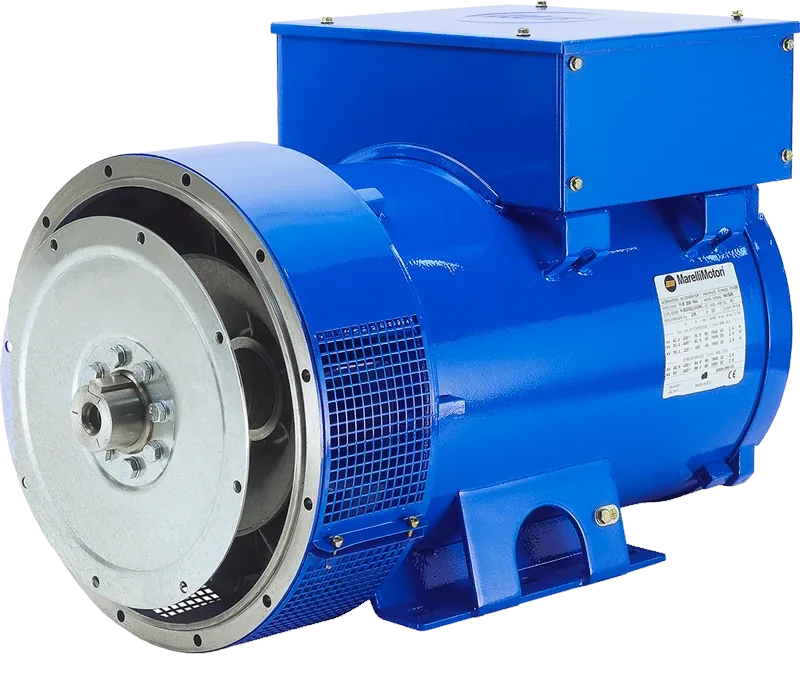
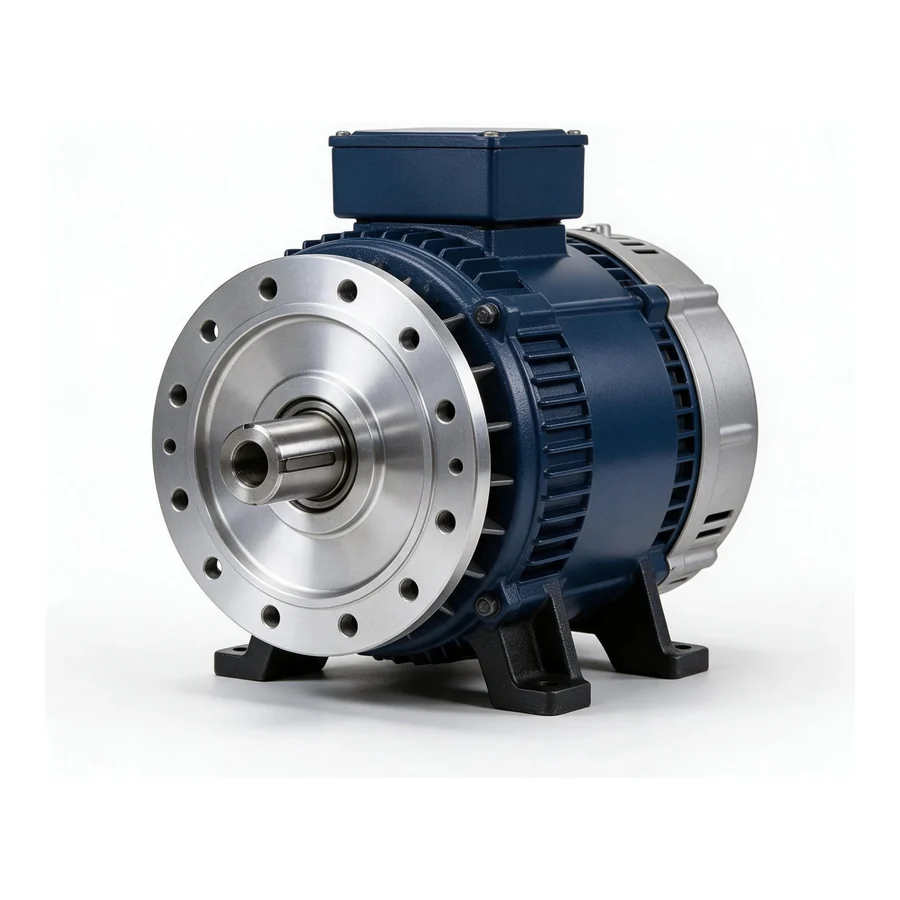
Marelli Three phase AC alternator 68 kW class - representative image | Jinjia Power

MXB225SB4 - Marelli | 68 kW

MXB225SB4

Status: IN STOCK, Same day shipping Worldwide available | Brand New, 3 Years International Warranty

Volume, OEM and project pricing available on request.

πŸ“ž Get a Quote:86-13553838770
← Back to products

Specifications

SKUMXB225SB4
BrandMarelli
SeriesMarelli MXB
Frame225
Core lengthSB
PhaseThree phase
Poles4-pole
Rated power68 kW
Apparent power85 kVA at 0.8 PF
Rated voltage400 V
Rated current122.7 A
Frequency50 Hz
Power factor0.8
Rated speed1500 rpm
Insulation classClass H (stator and rotor)
Ingress protectionIP23 standard, up to IP44
Excitation systembrushless, rotating rectifier (6-diode Graetz bridge); PMG or auxiliary winding optional
Voltage regulatorMARK VX / MARK V
Voltage regulation+/-1.0%
Bearingpermanently lubricated 6207-2RS-C3 / 6309-2RS1-C3-WT, L10 life >= 20,000 h
Winding connection12 re-connectable
Maximum overspeed2250 rpm
Frequency50 Hz
Rated speed1500 rpm
Core stack position2 of 6 in MXB family
Adjacent ratingsMXB225SA4 at 60 kW / MXB225MA4 at 80 kW
Altitude1000 m
StandardsIEC EN 60034-1, BS 4999-5000, VDE 0530, NF 51-100, NF 51-111, OVE M-10, NEMA MG 1.32
AvailabilityIN STOCK, Same day shipping Worldwide available
ConditionBrand New, 3 Years International Warranty

Product Overview

Model. The MXB225SB4 is a Marelli MXB 4-pole alternator. Marelli reads the model as series MXB, frame 225, core SB and 4 poles. The MXB range uses an aluminium alloy 46100S T6 frame with cooling ribs; the MJB range steps up to a steel frame for the larger frame sizes. It is wound for three-phase service at 50 Hz. Electrical rating. At 0.8 power factor lagging this machine is rated 68 kW, which is 85 kVA, delivered as three-phase at 400 V 50 Hz. At 400 V line-to-line that is 122.7 A per line. Small frames like this are sensitive to load power factor: running them well below 0.8 PF pushes the field current up and the stator current up at the same kW, so the nameplate kVA is the number to design to. The 1500 rpm figure is synchronous speed, so there is no slip and no speed-dependent voltage droop. Frame and core. The 225 frame carries the SB core. Frame size fixes the stator bore and the shaft centre height; the core length fixes how much active iron sits in that bore, and therefore how much output the machine can make at a given temperature rise. The exact finished weight and outline drawing depend on the winding and the coupling, so they are confirmed on the certified datasheet issued with the order. The cooling circuit is IC01 open drip proof, and the frame is aluminium alloy 46100S T6 frame with cooling ribs, steel shaft EN 10025. Three-phase winding. This is a three-phase machine with a 12 re-connectable winding brought out to 12 re-connectable terminals, so it can be reconnected on site for the usual voltage pairs β€” 380/220 V, 400/230 V, 415/240 V, 440/254 V and 480/277 V on the 50 Hz build, and the 60 Hz pairs on the 60 Hz build. Reconnection is done on the link board inside the terminal box, not by rewinding, which is why one machine can serve a 380 V job and a 480 V job. The 2/3 pitch design is what keeps the fifth and seventh space harmonics down without skewing the stator, and it is the reason the line-to-line waveform stays within the distortion limits the standards ask for. Four-pole build. A four-pole machine turns at 1500 rpm on 50 Hz and 1800 rpm on 60 Hz. That is the standard choice for generator sets from a few tens of kVA up to the low megawatt range, because the lower rotor speed gives a longer bearing life, a quieter fan, a higher subtransient reactance that is easier to coordinate with downstream protection, and a rotor that can carry a substantial damper cage for parallel operation. The trade is weight: a four-pole machine of a given kVA is roughly twice the mass of a two-pole one. Excitation and voltage regulation. The excitation system is brushless, rotating rectifier (6-diode Graetz bridge); PMG or auxiliary winding optional, regulated by MARK VX / MARK V, holding steady-state voltage to +/-1.0%. Marelli uses the MARK VX and MARK V regulators with a brushless rotating rectifier built as a six-diode Graetz bridge. A PMG or an auxiliary winding is available as an option, and on the 225 frame the auxiliary winding is the standard arrangement. The regulator senses three-phase voltage and holds +/-1.0% from no load to full load at any power factor within the rating. Mechanical build. The frame is aluminium alloy 46100S T6 frame with cooling ribs, steel shaft EN 10025. Bearings are permanently lubricated 6207-2RS-C3 / 6309-2RS1-C3-WT, L10 life >= 20,000 h. Mounting is IM 2105 horizontal single bearing (two bearing optional). Maximum overspeed is 2250 rpm, and the machine is rated for 1000 m. The terminal board is Bakelite PF2736 with seven studs on the 160 and 180 frames and nine studs on the 180 to 225 frames, which is what allows the twelve leads to be reconnected for the full range of voltage pairs. The shaft is EN 10025 steel. Bearing L10 life is quoted at 20,000 hours or better under rated load. Where it fits. Commercial buildings and small industrial plants: office air conditioning, refrigeration, lifts, and a workshop full of induction motors. Motor starting is normally the sizing case rather than steady-state kW. On a three-phase machine of 68 kW the practical constraint is usually the downstream protection and the cable, not the alternator itself. Core stack position. The SB core is stack position 2 of 6 in the MXB family, roughly 33% of the way along the family's lamination length range. It sits between the shorter SA and the longer MA. Short-stack builds like this one are picked when the set has to fit a compact canopy or a tight skid: the frame carries the rating with the least iron and the shortest overall length, at the cost of a slightly higher flux density in the teeth and a little more excitation current at part load. Where it sits in the range. The MXB family is catalogued from 20 kW up to 128 kW, and this page covers the 68 kW / 85 kVA point. The step below it is the MXB225SA4 at 60 kW, 75 kVA. The step above it is the MXB225MA4 at 80 kW, 100 kVA. If your load sits between two steps, take the higher one and let the engine run at part load rather than pushing the smaller machine to its limit on a hot afternoon. Reading the model code. A Marelli designation is read as the MXB or MJB series, a three-digit frame number, a two-letter core code, and the pole count. Here that gives MXB225SB4 for the model, 225 for the frame, SB for the core and three for the phase count, so the code on the nameplate and the code on this page match one for one. Quoting the full code rather than just the frame matters on this family, because the same frame number is built in several core lengths and the winding changes with the voltage. Frame position. The MXB range is built on 2 frame sizes β€” 180, 225 β€” and the 225 frame is number 2 of them. No other frame in this range carries exactly this rating, so the 225 is the only build at 68 kW and there is no cross-frame decision to make. What the nameplate means once it is wired in. At 68 kW and 85 kVA this machine pushes 123 A down each line on a 400 V three-phase supply. That current, not the kVA figure, is what the switchgear and the cable have to survive, so the outgoing breaker should be a 160 A frame device set to trip above 153 A, and the run from the alternator terminals to the first panel should be 50 mm2 copper per phase for a normal 25 to 30 m span. Longer runs, aluminium conductors or tray-installed cable all move that number up, and the volt drop at full load is what decides it in the end. On the mechanical side the prime mover has to deliver about 76.2 kW at the coupling. The usual 1.10 to 1.15 margin over the alternator rating covers the fan, the excitation loss and the governor droop, and it is the reason a 68 kW alternator is normally quoted against a 76.2 kW engine rather than a 68 kW one. Fuel burn follows the electrical load almost linearly in this range. At a realistic 0.29 L per kWh for a modern common-rail set, running this alternator at full rating takes roughly 20 L per hour; at 75 per cent load it drops to about 15 L per hour and at half load to about 11 L per hour, because the fixed losses stay put while the variable ones fall away. Quote the breaker frame, the cable size and the engine rating together with the alternator, because a set that is right on paper and undersized on the cable is the most common way a good alternator gets blamed for a bad installation. Where this rating sits in the frame ladder. Within the 225 frame MXB carries 6 distinct ratings, and this is number 2 of them at 68 kW. The step below is the MXB225SA4 at 60 kW / 75 kVA, 8 kW under this one; the step above is the MXB225MA4 at 80 kW / 100 kVA, 12 kW over it. Every step inside one frame is one more lamination stack length. The shaft, the bearings, the foot pattern, the terminal box and the AVR are the same part across the whole ladder, and only the core length and the winding change. That is why the price gap between two neighbouring steps is small while the gap between the last step of one frame and the first step of the next is large. It also sets the value-engineering rule: dropping one core size inside the frame saves money and axial length but eats the margin to the load, while stepping up one size costs far less than jumping to the next frame and buying a bigger skid, a bigger breaker and a bigger cable with it. Supply. Supplied as a genuine Marelli Motori unit β€” Marelli Motori S.p.A., built in Italy. MXB and MJB ranges are built in Italy and carry a European certificate of origin. Each alternator ships with the routine test certificate, the winding connection diagram, and the AVR commissioning sheet. Export packing is seaworthy plywood on a pallet sized to the frame, and the machine is strapped and shrink-wrapped inside it. Tell us the engine make and model, the coupling arrangement (single or two bearing), the voltage and frequency, and whether you need a PMG, and we will confirm the build before it leaves the works.

Jinjia Power Equipment Co., Ltd | Address: No.737, Guanzhang Road, Liaobu Town, Dongguan, China

Phone: 86-13553838770 | 86-0769-89610677 | info@jinjiadongli.com

Jinjia Power, Quality Assured

Frequently Asked Questions

What is the rated output of the MXB225SB4 alternator?

The MXB225SB4 is rated at 68 kW (85 kVA at 0.8 PF). The kW figure is the mechanical shaft input it accepts; the kVA figure is the electrical output at the stated power factor. Size the engine against the kW figure with a margin for the alternator's efficiency, and size the load against the kVA figure.

What voltage and frequency does the MXB225SB4 produce?

Rated output is 400 V at 50 Hz, Three phase. The winding is 12 re-connectable. Check the winding connection before ordering if your site runs a different voltage β€” a reconnectable unit can be rewired, a fixed-winding unit cannot.

What is the rated current of the MXB225SB4?

Rated current is 122.7 A at 400 V, Three phase. Use this figure when sizing cables, circuit breakers and the transfer switch β€” the breaker is set against the alternator's rated current, not the engine's.

How fast does the MXB225SB4 run and how many poles does it have?

It is a 4-pole machine running at 1500 rpm, 50 Hz. Pole count and speed are linked: a 4-pole machine at 50 Hz turns at 1500 rpm and at 60 Hz at 1800 rpm. The speed is fixed by the frequency, so the same frame cannot be run at an arbitrary speed.

What insulation class and ingress protection does the MXB225SB4 have?

Insulation is Class H (stator and rotor) and the enclosure is rated IP23 standard, up to IP44. Maximum overspeed is 2250 rpm. Class H insulation is rated for a 180 Β°C rise limit and gives margin for hot plant rooms; the IP rating states what the enclosure keeps out β€” IP23 protects against falling water at up to 60Β° from vertical, not against immersion.

What excitation system and voltage regulator does the MXB225SB4 use?

Excitation is brushless, rotating rectifier (6-diode Graetz bridge); PMG or auxiliary winding optional, regulated by MARK VX / MARK V. Voltage regulation is held to +/-1.0%. A brushless, self-excited machine has no slip rings to maintain, which is why it is the default for standby plant. The AVR is the part that holds voltage steady under changing load β€” if voltage wanders under load, the AVR is the first thing to check.

How stable is the voltage output of the MXB225SB4?

Voltage regulation is +/-1.0% from no load to full load at the stated power factor. That is the steady-state figure; transient dips when a large motor starts are larger and are handled by the engine's response and the AVR's forcing capability, not by the regulation figure alone.

What bearing does the MXB225SB4 use?

Bearing arrangement is permanently lubricated 6207-2RS-C3 / 6309-2RS1-C3-WT, L10 life >= 20,000 h. A single-bearing machine couples directly to the engine flywheel housing and needs no separate bedplate alignment; a two-bearing machine carries its own bearing and couples through a flexible coupling. Confirm which your engine expects before ordering.

Can the MXB225SB4 be reconnected for a different voltage?

Winding connection is 12 re-connectable. A 12-wire reconnectable machine can be wired in series or parallel, star or delta, to deliver several voltage combinations from the same alternator. If your market runs a voltage not listed on this page, send it and we will confirm whether the winding covers it.

What standards does the MXB225SB4 meet?

It is built to IEC EN 60034-1, BS 4999-5000, VDE 0530, NF 51-100, NF 51-111, OVE M-10, NEMA MG 1.32. These are the design and test standards the machine is verified against, not a certification mark β€” the test record and the manufacturer's declaration travel with the unit so your commissioning file is complete.

What do the 225 and SB designations mean?

The frame code 225 identifies the mechanical size of the machine in the Marelli MXB range, and the core sits 2 of 6 in MXB family. Within one frame the core length letter steps from short to long, and each step adds lamination stack and therefore output without changing the mounting dimensions. That is why two alternators with the same frame but different core letters are physically interchangeable but electrically different.

What is the nearest alternative rating to the MXB225SB4?

In the same frame family, MXB225SA4 at 60 kW / MXB225MA4 at 80 kW. Because the mounting dimensions are shared, stepping one core length up or down is usually a direct swap β€” useful when a load calculation lands between two catalogue ratings. Confirm the engine can carry the higher figure before you step up.

What altitude is the MXB225SB4 rated for?

The rating assumes an installation altitude of 1000 m. Above that, cooling air is thinner and the machine must be derated β€” roughly 1% of output per additional 100 m. If your site is higher, tell us the altitude and we will quote the next frame up rather than let the alternator run hot.

Is the MXB225SB4 in stock, and what warranty comes with it?

IN STOCK, Same day shipping Worldwide available. Condition: Brand New, 3 Years International Warranty. Consumables and common frame sizes ship from stock; less common windings are built to order. Send the engine model and the required voltage and we will confirm fitment against your set before the order is placed.